The 1 to 10 food rating scale
These are the words Matcha puts on each score. The last column is our suggestion for what each one means.
| Score | Word | What it means |
|---|---|---|
| 10 | Perfect | The best you’ve had of that food. You’d travel back for it. |
| 9 to 9.5 | Outstanding | You’d send a friend there. A contender for your #1. |
| 8 to 8.5 | Really good | You’d order it again and plan a visit around it. |
| 7 to 7.5 | Good | A solid dish. You’d eat it again, but you wouldn’t cross town for it. |
| 6 to 6.5 | Fine | Nothing wrong with it, and nothing you’ll remember. |
| 4 to 5.5 | Meh | A letdown. You wouldn’t order it again. |
| 1 to 3.5 | Skip it | Something was off. You’d warn a friend. |
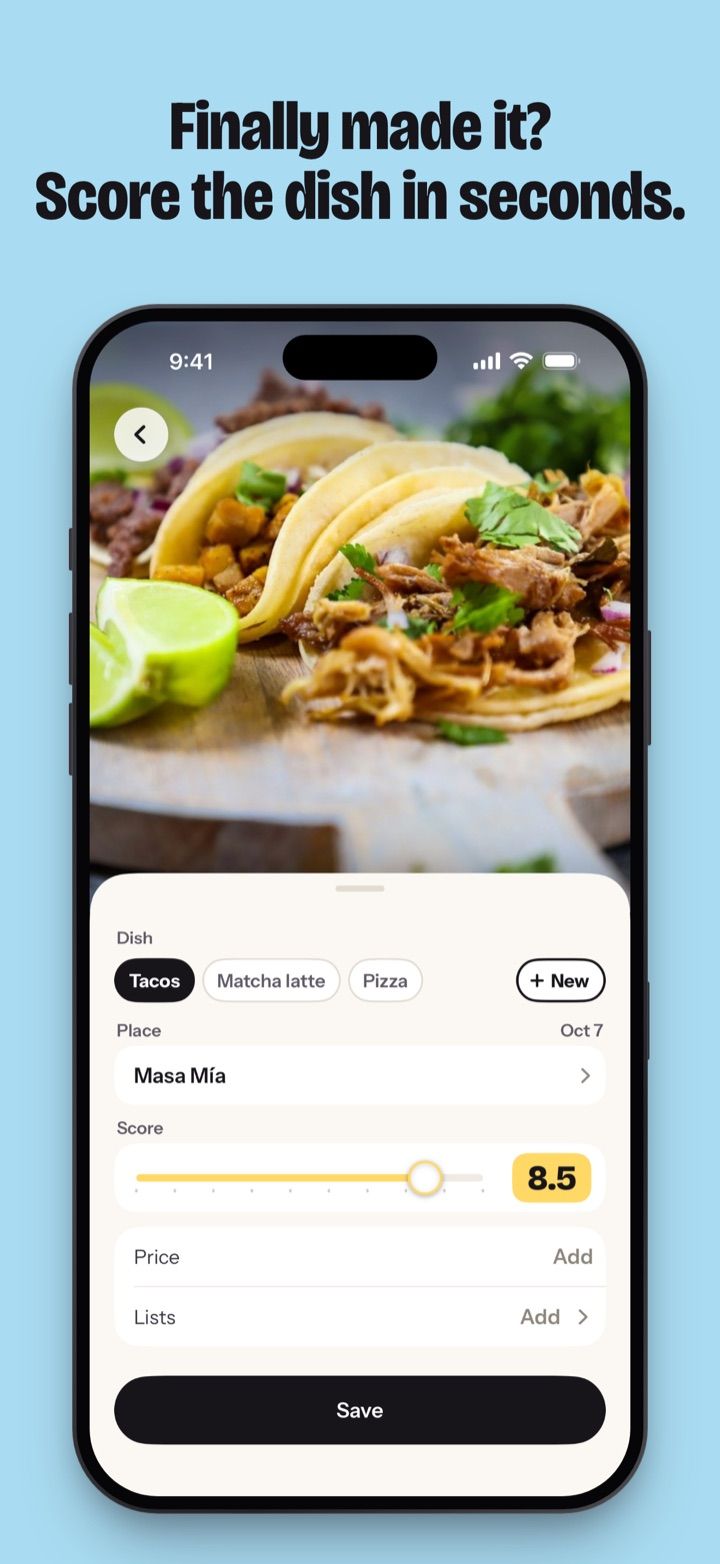
In Matcha, the word shows under the big number when you score a dish in a shared list, and VoiceOver reads it out on a dish’s page. The score slider and each dish’s score are coloured by the same bands: light beige under 6, soft yellow from 6 to 7.5, yellow at 8 and 8.5, and lime from 9. Map pins keep it simpler, with lime from 9, yellow at 8 and 8.5, and soft yellow below that.
Why 1 to 10 in half steps
Five stars leave too little room. A good bowl of ramen and a great one both end up at four stars, and then a ranking can’t tell them apart.
A 1 to 10 scale with half steps gives you 19 scores. That’s enough to split an 8 from an 8.5 when two dishes really were that close. It stops short of decimals like 8.3, which claim more than anyone remembers about a meal.
How to score a restaurant dish
Judge what arrived on the plate. Was it hot enough? Did the crust, the broth or the filling do what that dish should do? Did you finish it and want more?
Leave the evening out of it. The service, the wait, the room and the company all shape the night, but they don’t change what’s on the plate. If you want to remember them, put them in the note.
Keep one rule for price. You can score the food alone and write the price down next to it, which is what Matcha’s separate price field is for. Or you can let value pull the score up or down. Mixing the two from one dish to the next makes your rankings hard to trust.
Per-dish scores vs restaurant stars
A restaurant’s stars mix every plate together. The same pizzeria can make your best margherita and a forgettable tiramisu, and one average says nothing about which to order.
Per-dish scores tell you what to have. In Matcha, a restaurant’s number is the average of your dish scores there, and its pin on the map shows the score of the best dish you had. Open the place and its dishes are listed best first. The restaurant tracker app page covers restaurant rankings in more detail.
An example: three pizzas on one trip
Made-up dishes, all logged as Pizza, to show the scale at work.
| Pizza | What happened | Score |
|---|---|---|
| Margherita at a wood-fired place | Soft, blistered crust and sweet tomatoes. You’d send a friend there tomorrow. | 9.5, Outstanding |
| A slice near the station | Fine at midnight. Dry crust, plain sauce. | 6.5, Fine |
| A pizza with a soggy middle | Good toppings on a base that gave up. | 5, Meh |
If those are your first pizzas in Matcha, your Pizza ranking reads 9.5, 6.5, 5. Score the next one 9.5 or higher and it becomes your new #1.
Habits that keep your scores useful
- Use the same food name every time. In Matcha each food name has its own ranking, so “Pizza” and “Margherita” rank apart. Decide once whether you want one Ramen ranking or separate ones for tonkotsu and shoyu.
- Change a score when you change your mind. Edit the dish, and the ranking follows.
- Log a second visit as a new dish. The restaurant’s number becomes the average of both.
- Break ties with the half steps. When two dishes have the same score, Matcha puts the one you logged most recently first.
- Score before you read other people’s. In a shared list, Matcha keeps your friends’ scores hidden until you’ve given yours.
What Matcha does with your scores
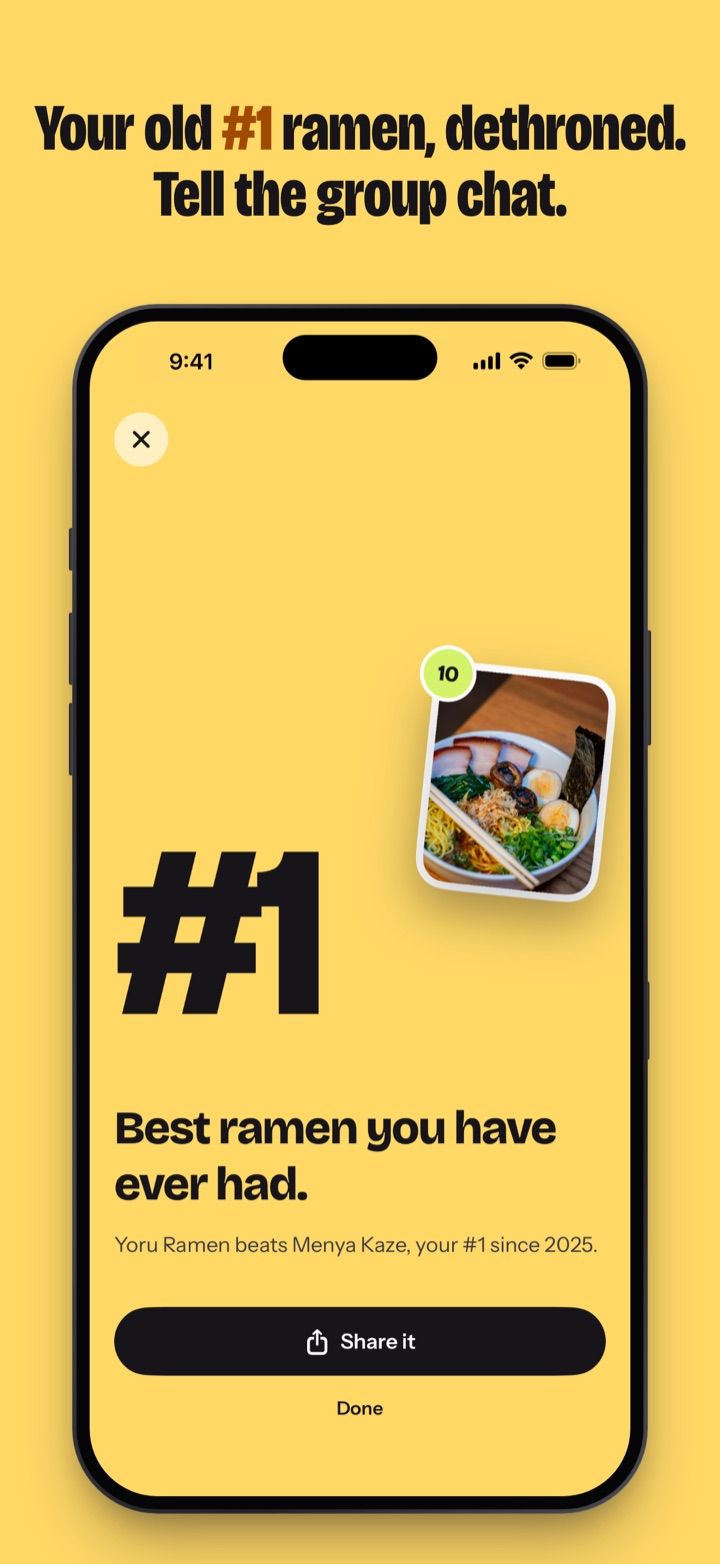
After you save a dish, Matcha shows where it landed, like “#2 of 14 in Pizza”. If it took first place, you get the New #1 screen, which names the place it beat. Rankings then shows every dish by food, city, restaurant and year, and the map filter can narrow your places to those where a dish scored 8+ or 9+.
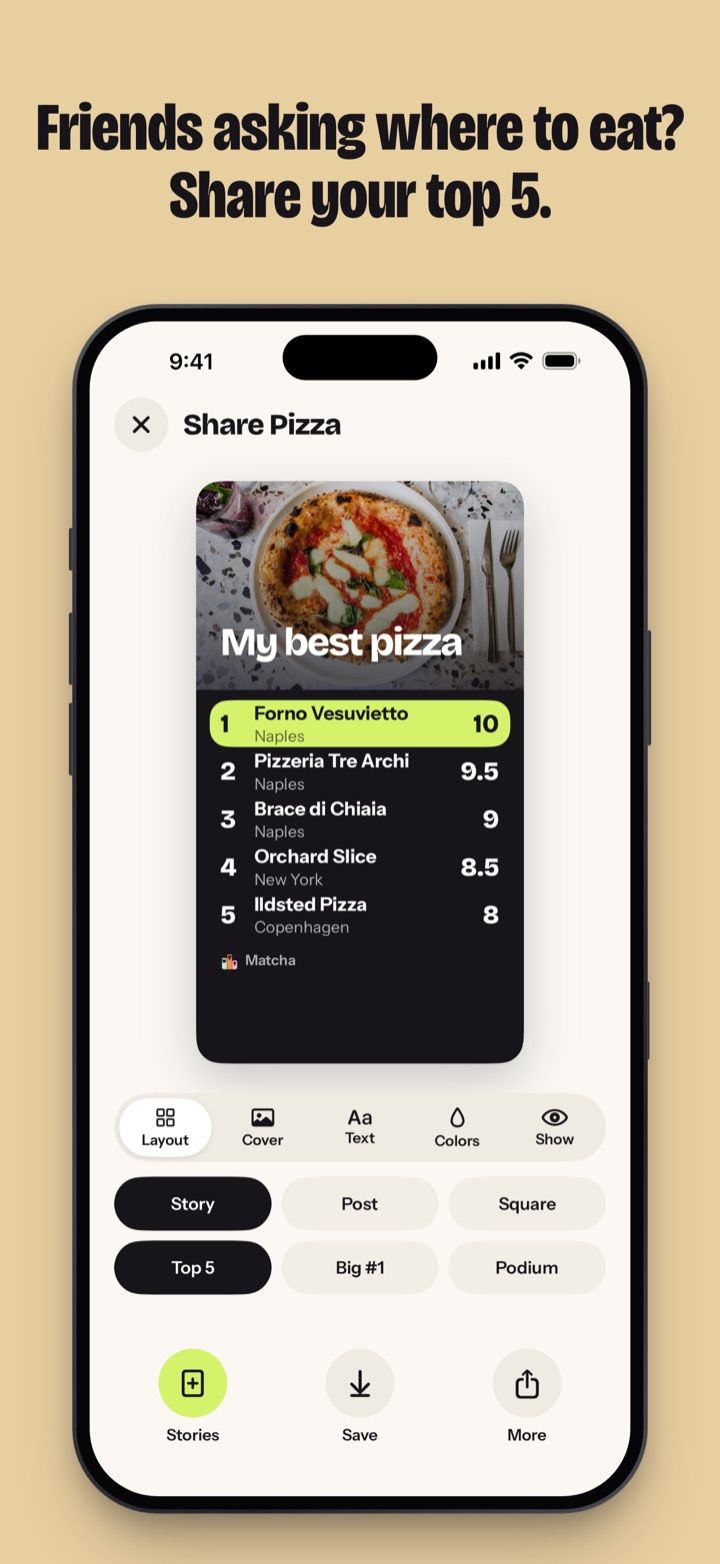
The whole flow, from first dish to shared list: how Matcha works. Keeping a list on paper or in a spreadsheet instead? How to keep track of restaurants has a free template with a 1 to 10 score column. For a single drink, see the matcha rating app.